

British-Israeli Emily Damari, a former hostage held for more than 15 months by Hamas in Gaza, has sharply condemned a decision denying her and other supporters of Israeli club Maccabi Tel Aviv the right to attend a major match in England. The game, a Europa League fixture against Aston Villa scheduled for November 6 at Villa Park in Birmingham, has been shrouded in controversy after local authorities flagged “safety concerns” tied to expected pro-Palestinian demonstrations.
Damari reacted publicly with anger and disbelief. “I was released from Hamas captivity in January … I am a die-hard fan of Maccabi Tel Aviv. I am shocked to my core with this outrageous decision to ban me, my family and my friends,” she posted on social media platform X. She described the move as “like putting a big sign on the outside of a stadium saying ‘No Jews allowed’” and asked what had become of Britain where, she claimed, “blatant antisemitism has become the norm.”
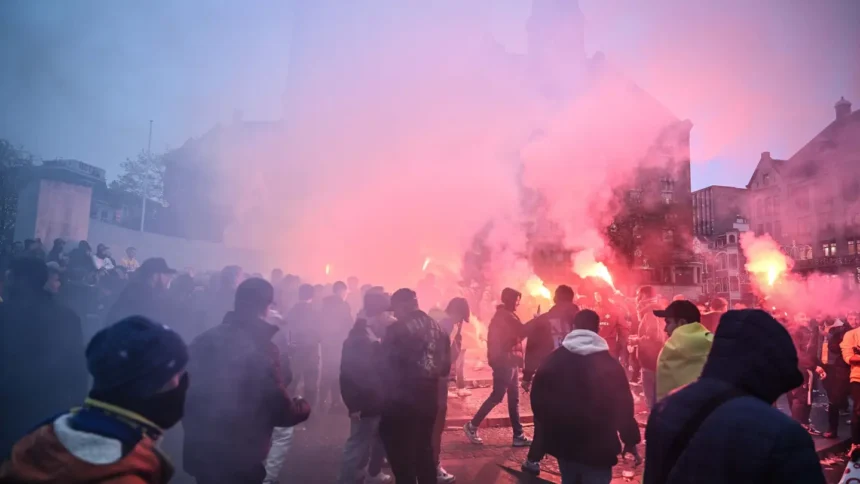
The primary reason cited by Birmingham’s Safety Advisory Group and West Midlands Police is the elevated risk of protests and potential violence tied to ongoing tensions in the Israel-Gaza conflict. Supporters of Maccabi have previously been involved in confrontations abroad; authorities refer to incidents during a past match in Amsterdam involving violence and arrests. The policing and local government bodies argue the measure is necessary to safeguard public order.
Damari’s response highlights a potent intersection of sports fandom, identity, and geopolitics. For her especially, football is more than a game—it represents a return to normal life, to freedom and community after months in captivity. Denying her attendance at what she called “my beloved team’s game” felt to her like a personal affront. Her case has drawn attention to how security decisions can ripple beyond immediate risk assessment—touching on civil liberties, religious discrimination, and national identity.
Politically the issue has quickly escalated. UK Prime Minister Keir Starmer described the ban as “the wrong decision,” emphasising that “the role of the police is to ensure all football fans can enjoy the game without fear of violence or intimidation.” Interior and culture ministers are said to be reviewing the situation and working with policing authorities to find a solution that allows fans to attend safely. Organisations such as UEFA and supporter groups have also voiced concern, arguing that exclusion could worsen tensions rather than reduce them.
Meanwhile, the Israeli club and its traveling fans say the decision is discriminatory. They argue that the club, its supporters, and being of Israeli nationality should not disqualify access to a major European match. Some observers note the broader context: This ban is one of several sports-related restrictions linked to the Israel-Gaza war, ranging from visa denials to fan exclusions in other countries.
At the heart of the dispute are questions of prevention versus participation: how authorities weigh the risk of protest-related violence against the rights of fans and citizens to attend matches. For Damari—and many who sympathise with her—the decision underscores what they perceive as unequal treatment of Jewish or Israeli supporters in the face of political rallies and conflicts.
The emotional impact for Damari is clear. Having emerged from captivity, her re-engagement with everyday life included returning to the stands to support her team. The ban not only prevents her attendance, but signals a loss of faith in how supporters like her will be treated. “Football is a way of bringing people together irrespective of their faith, colour or religion, and this decision does the exact opposite,” she wrote.
What happens next remains to be seen. The UK government is working to provide additional policing resources and to review whether the ban can be reversed. A special safety meeting is expected to determine whether the match can proceed with all fans allowed. If the ban is lifted, it may require new crowd control plans, protest-management strategies, and assurances from security agencies that all supporters will be safe.
Regardless of the outcome, the controversy has thrust sports diplomacy and fan rights into the spotlight. It poses broader questions: Should clubs and cities exclude fans pre-emptively because of nationality or potential protest affiliation? When does safety cross into discrimination? And how do countries respect both the right to protest and the freedom to attend sporting events?
For Emily Damari, the ban feels larger than one match—it represents an unresolved tension between freedom and fear, between recovery after trauma and the wider world’s response to her story. As she said: “What has become of the UK where blatant antisemitism has become the norm? What a sad world we are living in.”